

Game app development – creative entertainment in your pocket
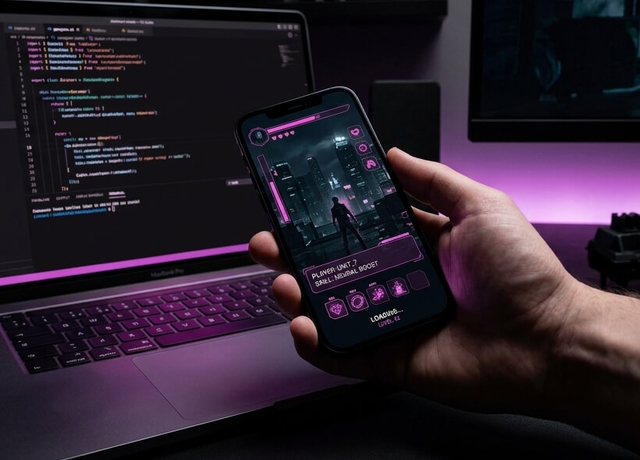
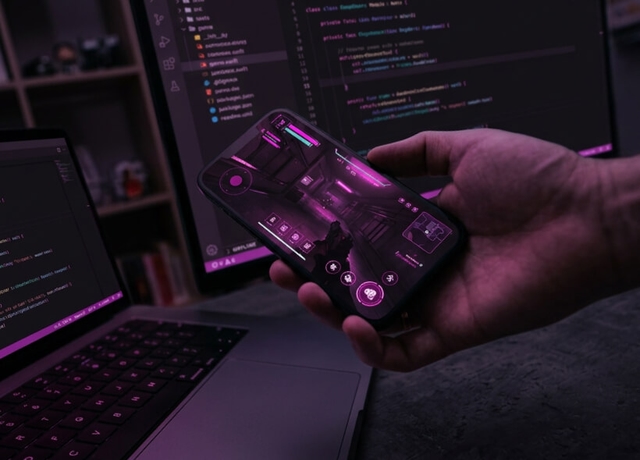
We build our games with the world-renowned Unity game engine, which provides a stable, scalable and high-performance technical foundation on both mobile platforms (Android and iOS).
We create smaller graphic assets in-house, while for complex, highly detailed 3D models and animations we work with a dedicated partner art studio. This lets our projects strike the right balance between creativity and technical precision.
In our projects, we use:
- 2D and 3D graphics,
- AR and VR technologies,
- gyroscope- and accelerometer-based controls,
- real-time physics simulations,
- a multiplayer architecture when needed.
Our goal isn't just to build a working game, but to create a digital product that's sustainable, scalable and commercially successful in the long run.

Monetization and business models
We build game monetization in line with Apple's and Google's guidelines. Our most common models:
- In-app purchases,
- A microtransaction system,
- A freemium business model.
- Subscriptions
- Hybrid (ads + purchases) solutions
We always choose the business model based on market research and target audience analysis.
Game apps in education
One of the fastest-growing areas is gamified learning (gamification). Modern educational and cognitive research clearly shows that interactive, experience-based learning:
- increases attention span
- improves memorization
- reduces mental load
- leads to longer-lasting knowledge retention
Our educational games make it possible to:
- earn points and use reward systems
- adapt difficulty levels
- simulate real-life situations
- model financial and banking processes
- build rehabilitation apps
Positive emotional feedback and a fun experience significantly boost motivation to learn.
Entertainment and revenue-driven games
The dominant model on the market today is the free-to-download, freemium game. In this model:
- the download and the base game are free
- players gain advantages through optional microtransactions
- they can buy faster progress and extra content
The microtransaction model relies on a large user base and small but regular purchases. With the right user experience and retention strategy, it can become a stable, long-term revenue model.
But the key to success isn't just monetization — it's balanced gameplay that motivates rather than pressures.
Marketing and growth strategy
Building a game isn't enough on its own. The key to success is your go-to-market strategy.
Before development, we recommend:
- target audience and competitor analysis,
- market research,
- monetization validation.
During development:
- building a beta version,
- user testing,
- analyzing feedback.
We support your launch with:
- landing page development,
- social media and Google Ads campaigns,
- an ASO (App Store Optimization) and SEO strategy.
The biggest mistake a game can make is to “come to an end.” Long-term success requires continuous new content, updates and community building.
The pillars of successful game development
- Thorough market research
- Strong game logic and user experience
- High-quality graphics
- A sustainable monetization model
- A deliberate marketing strategy
- Continuous development and optimization
Related services
Have a question? Let's talk!
Request a free consultation – we'll assess your needs at no cost and recommend a tailored solution.